

Trenta is a high alpine valley in the heart of the Julian Alps, in the northwestern part of Slovenia, in the municipality of Bovec. It stretches along the upper course of the Soča River, from its source under the northern slopes of Travnik and Jalovec to the Vrsnik area and further towards Bovec. The valley lies between the highest and most rugged peaks of the Julian Alps: it is bordered by the ridges of Prisojnik, Razor, and Triglav in the north, and the massifs of Kanin, Rombon, and Bavški Grintavec in the south. Due to its distinct mountain isolation and high altitude (900–1100 m in the central part), Trenta is one of the most recognizable high-mountain environments in Slovenia.
What geographical area does the name Trenta cover
The name Trenta is used on several conceptual levels:
-
Narrow meaning: the settlement of Trenta, which is divided into several hamlets (Na Logu, Soča, Lepena, Vrsnik, Upper and Lower Trenta).
-
Broader geographical meaning: the entire valley of the upper Soča, from the source to the confluence with the Lepenjica stream.
-
Wider regional meaning: the term Trenta is often used for the entire high-mountain area between Triglav, Razor, Prisojnik, Jalovec, Bavški Grintavec, and the Kanin mountain range – for the entire mountain world that naturally opens towards the Bovec basin.
-
Historical meaning: in the past, the term also denoted pasture and forest areas used by the inhabitants of Bovec and Kranjska Gora, including high-mountain pastures above the valley.
Geology
Trenta lies in the central part of the Julian Alps, which are built primarily of Upper Triassic limestone and dolomite (Dachstein limestone, main dolomite). These carbonate layers are several thousand meters thick and were formed in a tropical, shallow-sea environment approximately 200–230 million years ago.
Key geological features of the area:
-
Strong tectonic deformation: The Julian Alps were uplifted due to the northward thrusting of the Southern Alps; numerous faults and thrusts have formed steep walls, fault ravines, and dissected ridges.
-
Karst phenomena: due to the carbonate composition, karst springs, sinkholes, dolines, underground caves, and fissures are frequent, allowing rapid water infiltration.
-
Glacial deposits: the valley floor is covered by moraine sediments, scree cones, and glacial terraces, which testify to the extensive Pleistocene glaciation events.
Geomorphology
The Trenta Valley is a distinct U-shaped glacial valley formed in the Pleistocene by the powerful Soča glacier. Its geomorphology is extremely diverse:
-
Upper Trenta: a wide, open glacial basin with a flatter bottom, where the source of the Soča River is located.

- Middle Trenta: a narrower, trough-like part of the valley where steep slopes approach the river, creating dramatic relief contrasts.
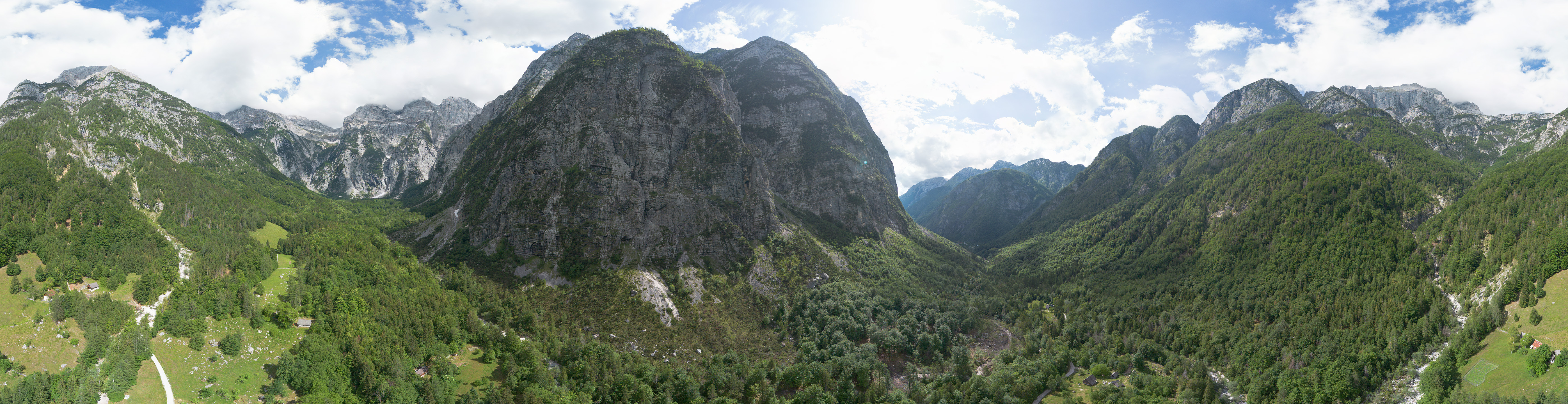
- Lower Trenta: the transition into a wider valley floor at Vrsnik and further towards Bovec.
- Steep slopes: above the valley rise the almost vertical walls of Prisojnik, Razor, Triglav, and Bavški Grintavec, shaped by intensive weathering, frost shattering, and frequent rockfalls.
Hydrology
Trenta is extremely rich in water resources, as it is one of the most important water hinterlands in the Julian Alps.
-
Source of the Soča: one of the most beautiful karst springs in Europe, which bursts from a deep rock fissure under the Travnik peak.
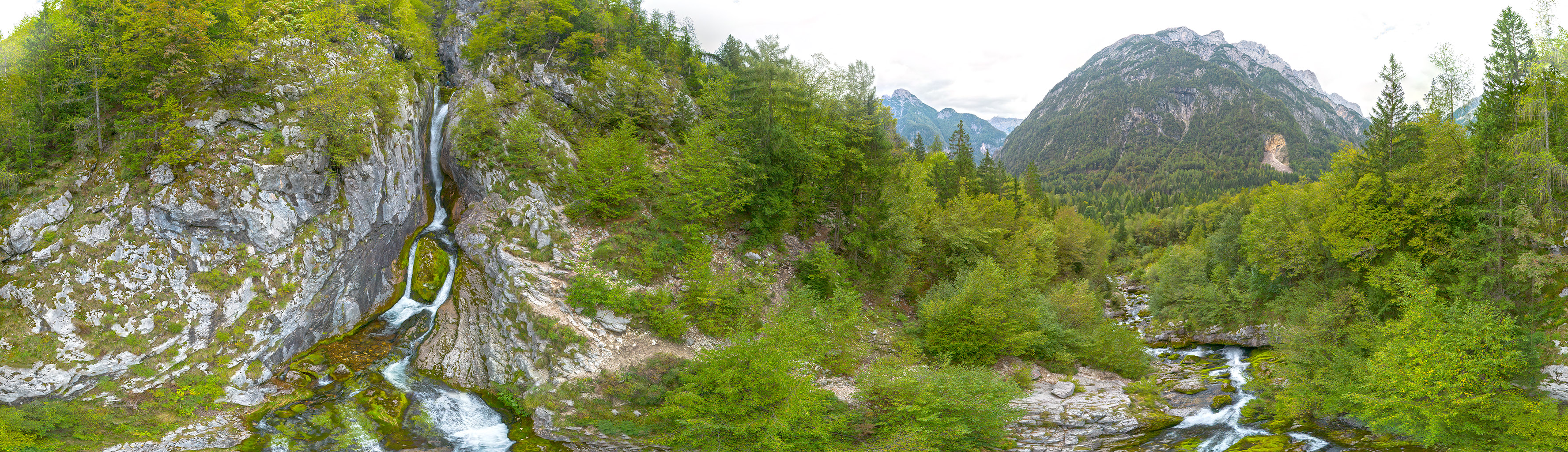
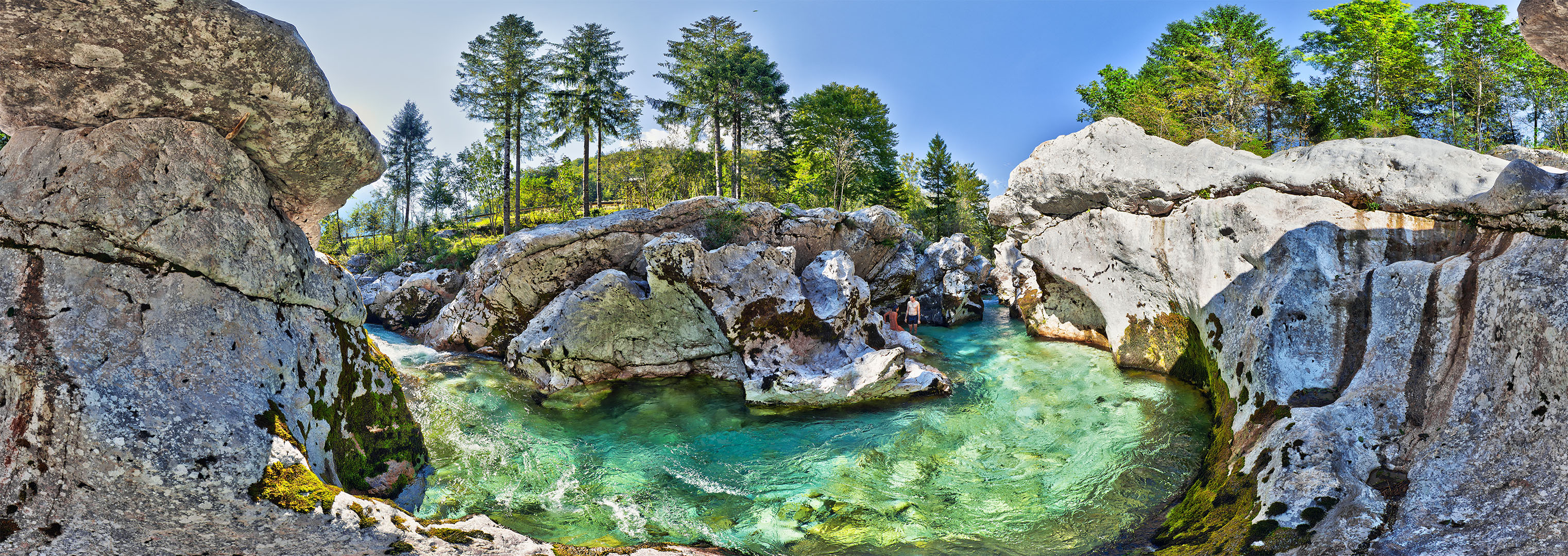
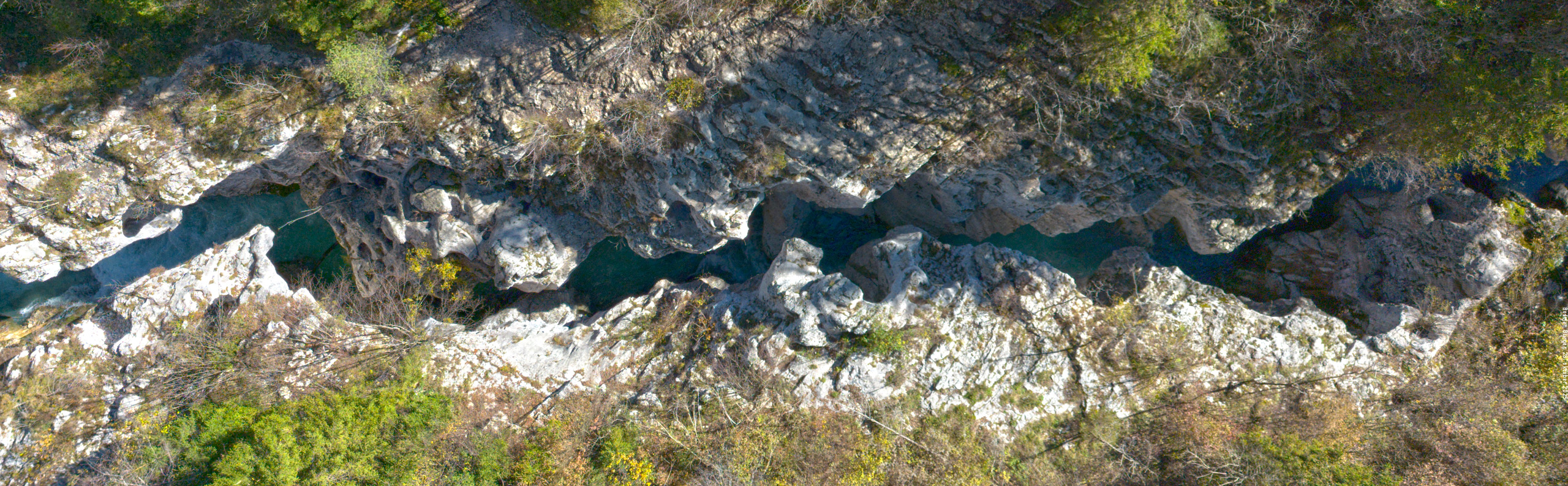
- Soča River: in its upper course, it is distinctly torrential, with characteristic gorges, pools, and waterfalls; its turquoise color is the result of dispersed carbonate particles.
-
Lepenjica and Koritnica: the largest tributaries in the wider Trenta area; Lepenjica flows from the Lepena valley, and Koritnica flows from under Mangart and Jalovec.
-
Karst springs and sinkholes: numerous smaller springs appear at the contacts between permeable limestones and less permeable dolomites.
-
Torrential systems: the slopes of Razor, Prisojnik, and Bavški Grintavec are crisscrossed with torrents that carry large amounts of debris during heavy rains.
History
Due to its remoteness, Trenta was settled late and sparsely.
-
First traces of humans date back to the Middle Ages, when shepherds and hunters began to appear here.
-
Pastoralism and mountain farming were the main economic activities for centuries; the pastures of Zadnjica, Trebiščina, Zapotok, and others were important summer grazing areas.
-
Trenta Pass: the valley was an important connection between Carniola and Friuli; an ancient path led over the Vršič pass, which was widened in the 19th century and converted into a strategic road during World War I.
-
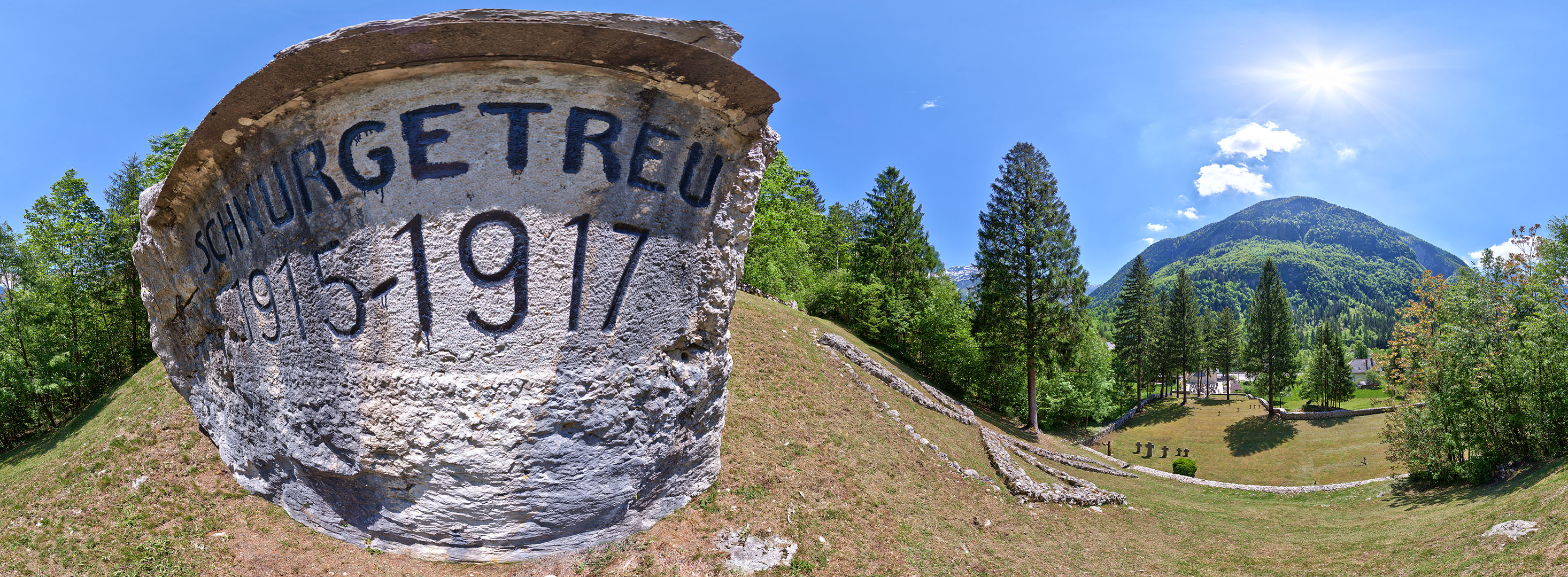
World War I: the area was the hinterland of the Isonzo Front; supply routes, military hospitals, and warehouses were located in Trenta.
-
Development of tourism: the end of the 19th and the beginning of the 20th century brought the first mountain huts, research expeditions, and the rise of mountaineering.
-
Triglav National Park: Trenta is today the central part of TNP; the TNP Information Center and the Juliana Alpine Botanical Garden operate in the Trenta Valley.
Today, Trenta is one of the key starting points for visiting Triglav National Park and represents one of the most important high-mountain tourist areas in Slovenia. Tourism is focused on nature, hiking, mountaineering tradition, cultural heritage, and landscape interpretation, with an emphasis on sustainable management and limiting impacts on sensitive alpine ecosystems.
Most important elements of the modern tourist role:
-
Starting point for high-mountain tours: paths lead from Trenta to Triglav, Razor, Prisojnik, Jalovec, Bavški Grintavec, Kriški podi, and many other peaks. Zadnjica, Lepena, and Vrsnik are starting points for some of the most beautiful alpine crossings.
-
Soča Valley as a natural attraction: the upper course of the Soča with gorges, pools, and waterfalls is one of Slovenia's most recognizable natural icons. Visitors come for the exceptional color of the water, swimming in pools, photography, and experiencing untouched nature.
-
TNP Trenta Information Center: an important educational center that introduces visitors to natural processes, cultural landscape, settlement history, and the park's protection regime.
-
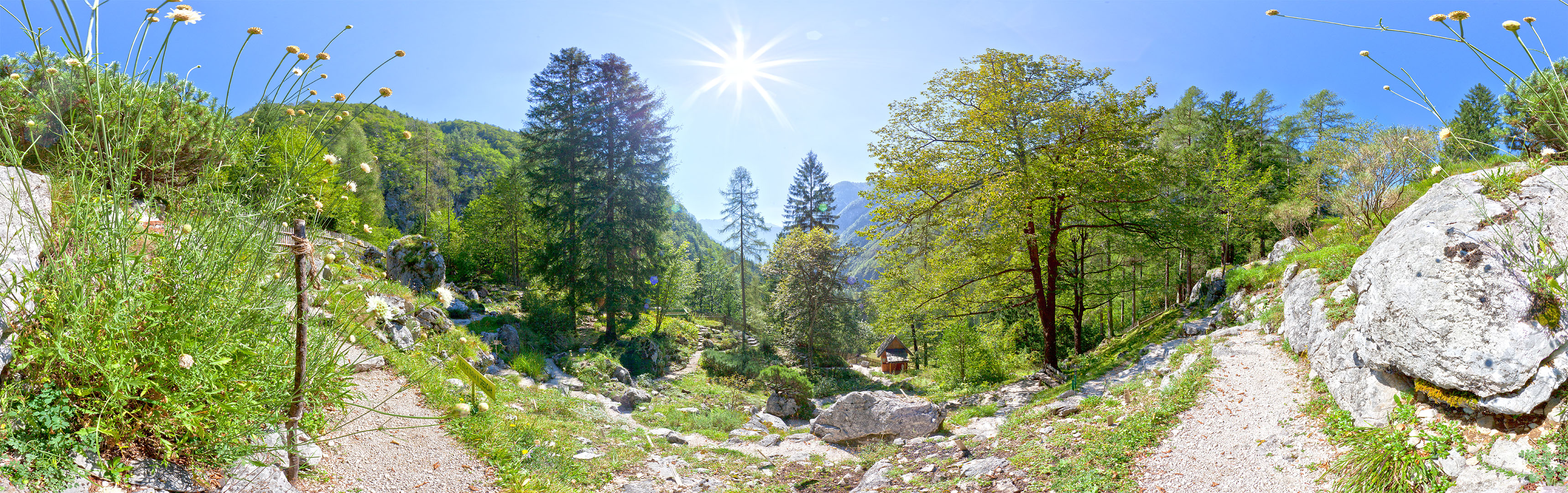
Juliana Alpine Botanical Garden: the oldest alpine botanical garden in Slovenia, which showcases the flora of the Julian Alps and is an important scientific and educational site.
-
Pastoral and cultural heritage: preserved mountain pastures, shepherd buildings, dry stone walls, and traditional architecture represent an important part of Trenta's identity.
-
Outdoor activities: hiking, mountaineering, cycling, fishing in the Soča, nature observation, interpretive trails, and photographic tourism.
-
Peace and seclusion: Trenta remains a sparsely populated and spatially dispersed valley, which gives it a special character – visitors often choose it for its silence, authenticity, and the feeling of remoteness from the urban world.
-
Sustainable approach: due to its location in the central part of the TNP, tourism is strictly regulated. The emphasis is on limiting traffic, protecting water sources, controlling visits to the most sensitive areas, and promoting soft mobility and responsible visitor behavior.