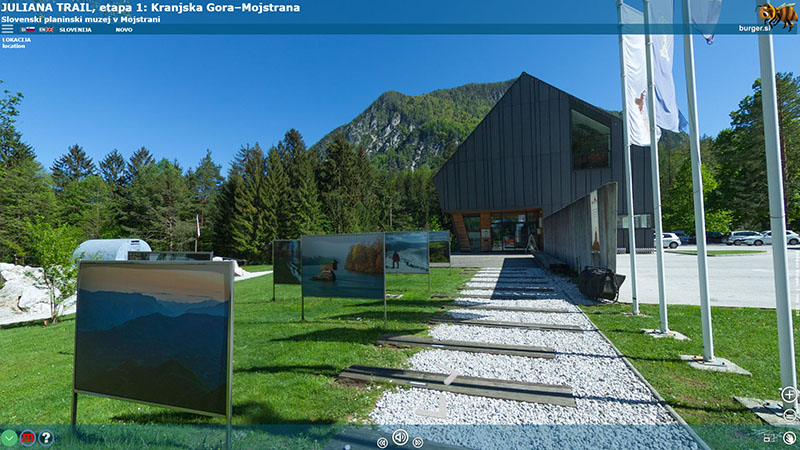
Slovenia is a markedly diverse mountainous and hilly country at the crossroads of the Alps, the Dinaric Alps, the Pannonian Basin, and the Mediterranean. More than two-thirds of Slovenian territory lies above 300 metres above sea level, while the surface is shaped by extraordinary geological, tectonic, and climatic variety. Within a relatively small area, high limestone and dolomite Alpine peaks rise sharply, forested pre-Alpine and crystalline hills stretch out, wine-growing hillocks undulate, and high karst plateaus unfold.
1. Geomorphological Classification: What Are Mountain Ranges, Hills, and Hillocks?
In Slovenian geography and geomorphology, elevated terrain is divided according to elevation above sea level, relative relief (the height difference between valley floors and crests or summits), slope gradient, and the degree of landform dissection:
| Relief Unit | Typical Elevation | Relative Relief and Surface Landforms |
|---|---|---|
| Mountain Range (High and Mid-Mountains) | Above 1500 m (high mountains above the upper timberline ~1700–1900 m) | Relative relief exceeds 800–1000 m. Characterized by sharp ridges, rock walls, cirques, glacial valleys, scree slopes, and prominent mountain peaks. |
| Hills (Hribovje) | From approximately 500 m to 1500 m | Relative relief between 300 and 800 m. Slopes are steep, yet mostly covered with forest; ridges and summits are more rounded than in high mountains. |
| Hillocks (Gričevje) | From approximately 200 m to 500 m | Relative relief between 50 and 300 m. Characterized by gentle to moderately steep slopes, softly rounded crests, and finely dissected valleys and gullies (often in Neogene marls, sandstones, and gravels). |
2. Difference Between "Gora" and "Planina": Why Is "Gora" Correct Instead of "Planina"?
In everyday speech and under the influence of certain South Slavic languages (where the word planina means any mountain or mountain range), a common mistake occurs in Slovenian when the term "planina" is used for a mountain peak or mountain range. In standard Slovenian and Slovenian geographical science, the concepts of gora and planina have clearly separated, precise meanings:
- Gora (Mountain) is a large, prominent natural elevation of the Earth's surface with steep slopes, ridges, and a summit (e.g., Mount Triglav, Mount Grintovec, Mount Stol, high mountains).
- Planina (Alpine Pasture) in Slovenian means a high-mountain or mid-mountain pasture—a levelled, grassy terrain in the mountains where people drove livestock to graze in summer and where herdsmen's huts stand (e.g., Velika planina, Planina Zajamniki, Planina Blato, Planina pod Golico). The words planšar (herdsman) and planšarstvo (alpine dairy farming) also derive from this.
Therefore, in Slovenian, we hike into the gore (mountains) rather than "planine" (unless we are specifically visiting a mountain pasture), and Slovenia is a mountainous country with a rich alpine herding heritage on its pastures.
3. Mountain Ranges, Hills, and Hillocks in Slovenia – Bedrock Geology, Flora, and Fauna
Due to the extraordinary diversity of rocks and the meeting of four major European biogeographical regions (Alpine, Dinaric, Pannonian, and Mediterranean), each Slovenian elevated relief unit has its own distinctive geological structure as well as characteristic plant life (flora) and animal life (fauna):
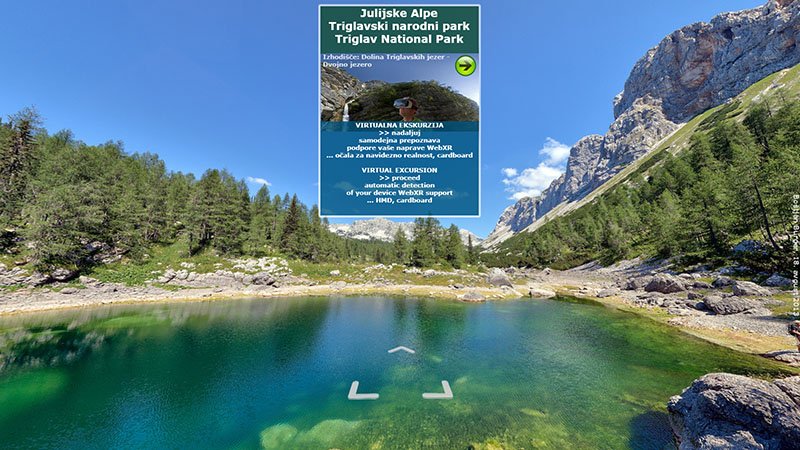
A. Julian Alps (Triglav, 2864 m)
- Bedrock and Geology: Dominated by thick layers of Mesozoic (Triassic) carbonate rocks, particularly Dachstein limestone and dolomite, which form mighty rock walls, cirques, and high-mountain karst (karren, flutes, shafts).
- Flora (Botany): Distinct altitudinal vegetation belts (beech and spruce forest, dwarf pine belt, alpine meadows, and rock crevices). Rich alpine and endemic flora: Triglav cinquefoil (Potentilla nitida), Zoys' bellflower (Campanula zoysii), Julian poppy, edelweiss, Trenta scabious (Scabiosa trenta), and Carniolan lily.
- Fauna: Alpine ibex, chamois, marmot, golden eagle, rock ptarmigan, black grouse, western capercaillie, mountain hare, common European adder, and the indigenous marble trout in watercourses.
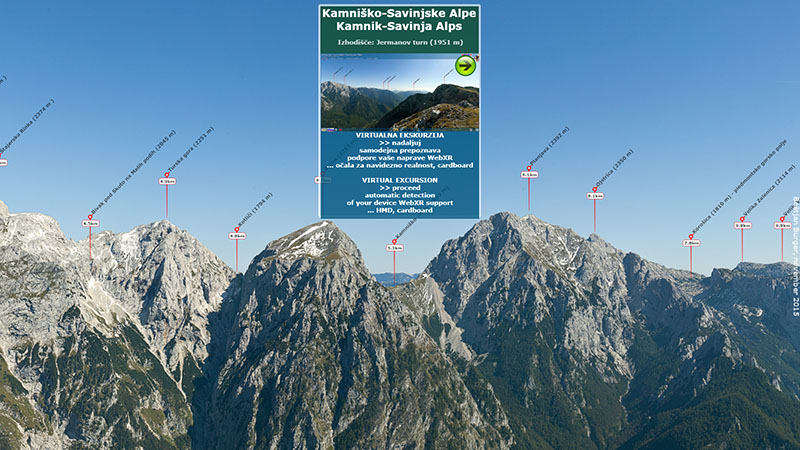
B. Kamnik–Savinja Alps (Grintovec, 2558 m)
- Bedrock and Geology: The central crest is built of Triassic limestones and dolomites (Grintovec, Skuta, Planjava, Ojstrica), while on the southern and eastern margins (Smrekovec Range) extrusive volcanic rocks (andesite, tuffs) and Palaeozoic shales also appear, giving rise to a denser hydrographic network and waterfalls (Rinka, Palenk, Orglice).
- Flora (Botany): Extensive beech, fir-beech, and spruce forests; on karstified plateaus (Velika planina, Dleskovška planota), vast dwarf pine stands and colourful high-mountain flower meadows with Kamnik vanilla orchid (Nigritella lithopolitanica), Clusius' gentian, auricula, sticky primrose, and edelweiss.
- Fauna: Chamois, Alpine ibex, mouflon, red deer, roe deer, black grouse, boreal owl, Eurasian three-toed woodpecker, golden eagle, Alpine salamander, and horned viper.
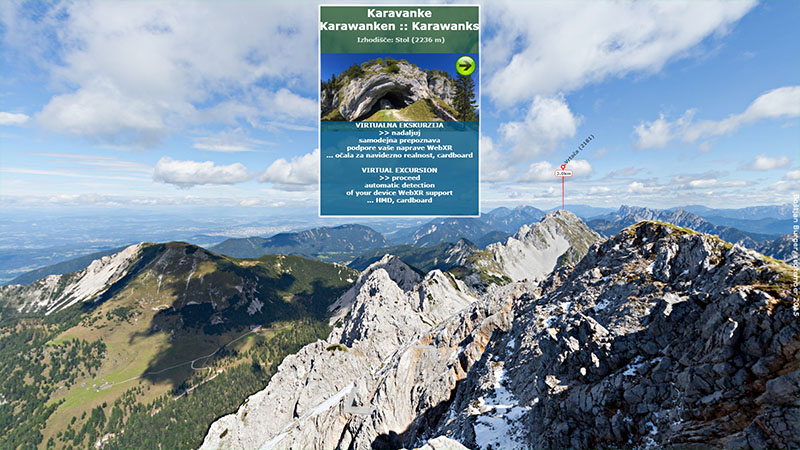
C. Karawanks (Stol, 2236 m)
- Bedrock and Geology: A tectonically complex border mountain chain along the Periadriatic Seam. Alongside Mesozoic limestones and dolomites (Stol, Vrtača, Begunjščica, Košuta, Peca), it comprises Palaeozoic sandstones, mudstones, conglomerates (Dovžan Gorge), and igneous rocks (tonalite in the Črna na Koroškem area).
- Flora (Botany): Due to alternating limestone and silicate bedrock, the flora is exceptionally rich. Famous sites include habitats of wild daffodils on Golica, Carniolan primrose, Carinthian wulfenia, alpine clematis, hairy alpenrose, and larch forests (Zelenica).
- Fauna: Chamois, mouflon, red deer, roe deer, western capercaillie, hazel grouse, rock ptarmigan, peregrine falcon, golden eagle, and a rich high-mountain butterfly fauna (e.g., Apollo).
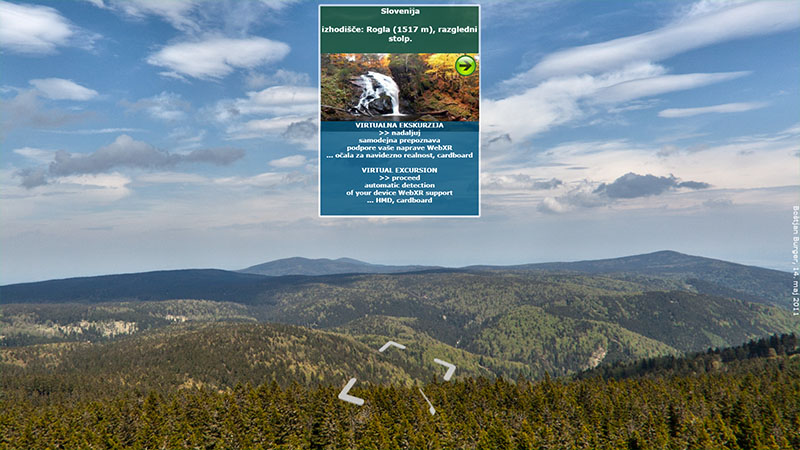
D. Pohorje (Črni vrh, 1543 m)
- Bedrock and Geology: Geologically completely different from the limestone Alps—built of impermeable metamorphic rocks (gneiss, mica schist, phyllite) and plutonic igneous rocks (Pohorje tonalite/granodiorite). Due to water retention, there is a dense river network, deep gullies (Lobnica Gorge), waterfalls (Veliki and Mali Šumik), and periglacial blockfields.
- Flora (Botany): Acidophilic (acid-loving) flora on silicate bedrock: mighty primeval forest remnants of fir and beech (Šumik), spruce forests, bilberry shrubs, heather, and unique peat bogs (Lovrenška Lakes, Ribniško Lake, Črno Lake) with round-leaved sundew, cranberry, peat mosses, and dwarf pine.
- Fauna: Western capercaillie, hazel grouse, boreal and Eurasian pygmy owls, black stork, red deer, roe deer, wild boar, Eurasian otter along Pohorje streams, and endangered bog species of dragonflies and butterflies.
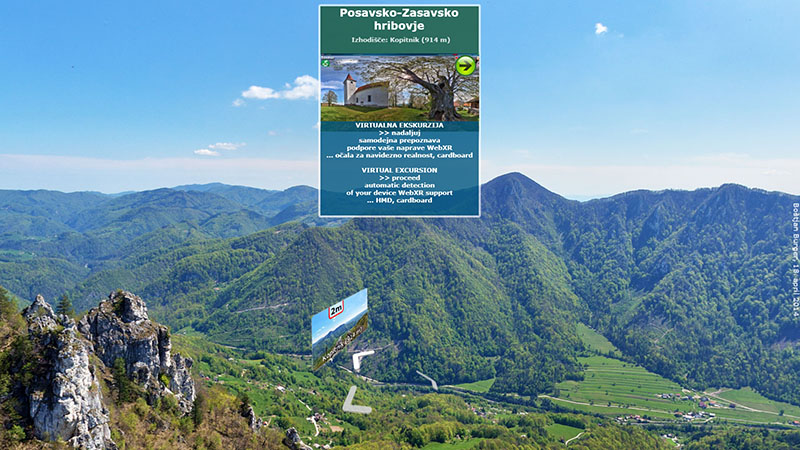
E. Pre-Alpine Hills (Posavje, Zasavje, Škofja Loka, Cerkno, and Polhov Gradec Hills)
- Bedrock and Geology: Alternation of Triassic limestones and dolomites (forming steep isolated peaks and gorges such as Kum, Limbarska gora, Kopitnik, Boč, Donačka gora) with Palaeozoic shales, sandstones, and Tertiary marls.
- Flora (Botany): Extensive mixed deciduous and coniferous forests (beech, hornbeam, sweet chestnut, and oak woods on sunny slopes; fir-beech forests at higher elevations). Botanical gems include Blagay's daphne (Daphne blagayana) in the Polhov Gradec Hills, pasqueflower on Boč, and centuries-old Šmohor lime trees.
- Fauna: Roe deer, red deer, wild boar, red fox, European badger, beech marten, edible dormouse, Eurasian eagle-owl, tawny owl, common buzzard, fire salamander, and numerous bat species in smaller karst caves.
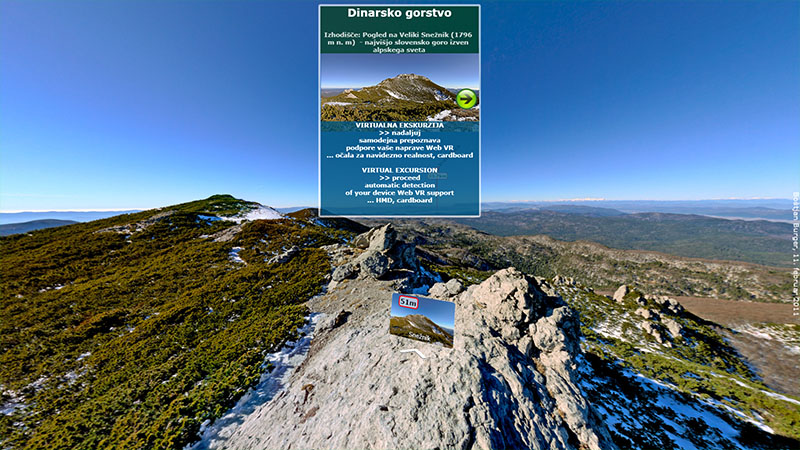
F. Dinaric Alps and High Karst Plateaus (Veliki Snežnik, 1796 m)
- Bedrock and Geology: Distinct northwest–southeast (Dinaric) orientation of crests and plateaus (Trnovski gozd, Nanos, Hrušica, Bloke, Snežnik, Kočevski rog, Gorjanci). Dominated by karstified Jurassic and Cretaceous limestones and dolomites with uvalas, sinkholes, collapse dolines, karst poljes, and world-famous cave systems without surface watercourses.
- Flora (Botany): Dinaric fir-beech forests, frost hollows with vegetation inversion (e.g., Smrekova draga), and on the summit of Snežnik a pronounced subalpine dwarf pine belt with Illyrian and Alpine flora (Carniolan primrose, Kitaibel's primrose, Snežnik pink, mountain avens, martagon lily).
- Fauna: One of Europe's most important refuges for large carnivores: brown bear, grey wolf, and Eurasian lynx, alongside wildcat, red deer, roe deer, wild boar, Ural owl, white-backed woodpecker, and a rich subterranean cave fauna (olm/Proteus anguinus, slenderneck beetle).
G. Sub-Pannonian and Sub-Mediterranean Hillocks (Slovenske gorice, Goričko, Haloze, Kozjansko; Goriška Brda, Vipava Hills, Šavrin Hills)
- Bedrock and Geology: Eastern sub-Pannonian hillocks are composed of soft Tertiary (Neogene) sediments—marls, sandstones, sands, gravel, and clay—which are prone to slumps and landslides. Southwestern sub-Mediterranean hillocks are formed of Eocene flysch (alternating marl and sandstone), which retains water and allows surface runoff.
- Flora (Botany): In the east, thermophilous oak-hornbeam and sweet chestnut forests, dry meadows with wild orchids, wet meadows with snake's head fritillary, and a cultural landscape of vineyards and orchards. In the southwest, sub-Mediterranean vegetation with European hop-hornbeam, manna ash, downy oak, smoke bush, olive trees, and grapevines.
- Fauna: Roe deer, European hare, common pheasant, grey partridge, Eurasian hoopoe, European bee-eater (in sandy cliffs), Eurasian eagle-owl, European tree frog, smooth newt, European pond turtle (Goričko), and sub-Mediterranean species of lizards (Italian wall lizard), snakes (green whip snake), and insects in the southwest.
Geo-x: Specialized Geographical and Geomorphological Chapters
4. Significance of the Mountain World for Slovenian Cultural Identity
The mountain world is one of the strongest symbols of Slovenian national, cultural, and spatial identity. During the national awakening in the 19th century, the mountains became a space for asserting the Slovenian language and national consciousness—from the first ascents of Triglav, the founding of the Slovenian Mountaineering Society in 1893, and the Aljaž Tower (1895) to rich mountaineering literature, songs, and fine arts (Julius Kugy, Henrik Tuma, Jakob Aljaž, Ivan Grohar, Valentin Stanič).
Triglav, as the highest peak, is depicted in the Slovenian national coat of arms and on the flag, and hiking in the mountains is more than just recreation for Slovenians: it is part of a way of life, respect for nature, intergenerational bonding, and awareness of one's own homeland. Through 360° spatial panoramas, the digital archive MojaSlovenija.si / burger.si brings this remarkable mountain world closer to everyone—as an educational tool, scientific documentation, and a lasting record of Slovenian natural heritage.
Author: Boštjan Burger