

Stockholm is the capital and largest city of Sweden, serving as the political, cultural, media, and economic heart of the nation. Built at the intersection of vast lakes and the open sea, it is widely considered one of the most beautiful capitals in the world. Its unique urban development over the centuries—evolving from a strategic fortress to a modern cosmopolitan metropolis—reflects the stability and prosperity of the Swedish state.
Geographical Features and Climate of Stockholm
Stockholm is situated on Sweden's east coast, where the massive freshwater Lake Mälaren meets the brackish waters of the Baltic Sea. The city spreads across 14 islands connected by more than 50 bridges, earning it the celebrated nickname "Venice of the North." Water surfaces account for a full third of the total city area, while another third is dedicated to green parks and woodland. The historical core of the city is Gamla Stan (Old Town), situated on the island of Stadsholmen, which effectively divides the lake currents from the sea.
-
The Uniqueness of the Archipelago: Extending eastward into the Baltic Sea lies the magnificent Stockholm Archipelago (Stockholms skärgård), comprising over 30,000 islands, islets, and skerries. This natural maritime labyrinth has shielded the inner harbor from harsh sea conditions for centuries, shaping the city's seafaring identity, while today serving as one of the region's premier recreational landscapes.
-
Climate Conditions: Despite its northerly latitude, Stockholm enjoys a temperate maritime climate heavily mitigated by the Gulf Stream. Winters are relatively cold but significantly milder than in the country's interior, with average January temperatures hovering around -1 °C to -3 °C. Summers are pleasantly warm and sunny with long daylight hours, as average July temperatures range from 20 °C to 25 °C. The city receives roughly 530 mm of precipitation annually.
Foundation and Medieval Prosperity
The roots of Stockholm date back to the mid-13th century. It was first mentioned in writing in 1252, when it was established as a crucial fortress by the Swedish statesman Birger Jarl. Its primary objective was to protect the wealthy settlements surrounding Lake Mälaren from foreign pillaging raids and pirates, while consolidating control over Baltic trade routes. The city's name is derived from the words stock (meaning log or defensive palisade) and holm (meaning islet).
-
The Hanseatic Period: Shortly after its foundation, Stockholm's extraordinary strategic position turned it into a vital trading hub for the German Hanseatic League. German merchants exerted immense influence over the city's administration and architecture, and the town served as the primary export center for Swedish iron and copper mined in the Bergslagen region.
-
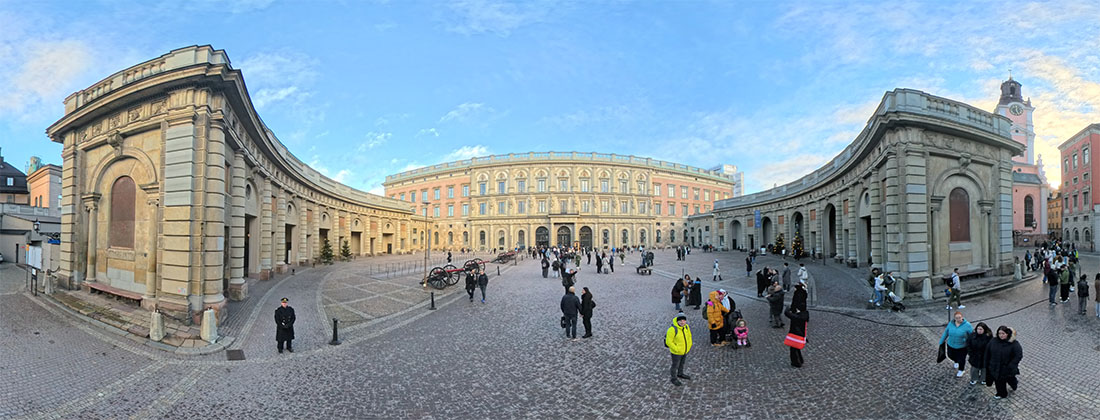
Center of the Swedish Kingdom: Under the leadership of King Gustav Vasa, Sweden permanently severed the Kalmar Union with Denmark in 1523. Stockholm was proclaimed the official capital of an independent Swedish Kingdom. The city began expanding rapidly beyond the walls of the old town onto the neighboring islands of Norrmalm, Södermalm, and Östermalm.
Wars, Expansion, and the Golden Age of an Empire
In the 17th century, Sweden emerged as a major European superpower, an ascension that directly catalyzed a monumental architectural transformation of its capital:
-
The Stockholm Bloodbath (1520): Before its imperial rise, the city endured one of its greatest tragedies when the Danish King Christian II executed more than 80 Swedish nobles and burghers in the main square, Stortorget, igniting a successful rebellion led by Gustav Vasa.
-
Age of the Swedish Empire (Stormaktstiden): Between 1611 and 1718, Stockholm blossomed into a glittering imperial capital. The city's population grew tenfold during this era. Royalty and wealthy aristocrats constructed grand Baroque palaces that still grace the waterfronts today. Numerous royal academies and centralized state institutions were established.
-
Fires and Urban Planning: Like other cities constructed primarily of wood, Stockholm suffered several severe fires throughout its history (such as the destruction of the old Tre Kronor royal castle in 1697). Consequently, authorities began enforcing strict stone and brick construction mandates and laid out wide, neoclassical streets designed to halt catastrophic fires.
Population and Social Structure
Stockholm currently has just over 980,000 residents within its municipal boundaries, while the wider Greater Stockholm urban region (Storstockholm) encompasses more than 2.4 million people, making it the most populous urban area in the Scandinavian countries.
-
International Character and Inclusivity: The city is renowned for its openness and multiculturalism. Roughly a quarter of the population has an immigrant background, enriching the city with a distinctly cosmopolitan flair. While Swedish is the official language, the citizenry stands out for its exceptionally high proficiency in English.
-
Innovative and Young Population: Driven by the presence of premier universities and a booming high-tech sector, Stockholm attracts young professionals and students from all over the world. The region boasts exceptionally high educational levels and is famous for its progressive social values and profound ecological awareness.
Modern-Day Role of Stockholm
Economy and High Technology
Stockholm's economy is highly modern, driven by the service sector, high technology, and financial services. The city is the undisputed financial capital of Scandinavia, hosting the Nasdaq Stockholm exchange and the headquarters of major Nordic banking institutions.
-
The European Capital of Unicorns: Stockholm is the world's second-largest incubator of billion-dollar tech startups (unicorns) per capita, trailing only Silicon Valley. It is the birthplace of globally dominant brands such as Spotify, Skype, King (Candy Crush), and Klarna.
-
Green Economy and Sustainability: Appointed as the very first European Green Capital (2010), Stockholm is a global role model for sustainable development. The city aims to become completely fossil-fuel-free and carbon-neutral, goals pursued via hyper-efficient public transit and eco-friendly architecture.
Education and Scientific Research
Stockholm is home to some of the world's most prestigious academic institutions, where the world-renowned Nobel Prizes are awarded annually:
-
Stockholm University (Stockholms universitet): One of Scandinavia's largest universities, highly regarded in the fields of natural sciences, law, and social sciences.
-
Karolinska Institute (Karolinska Institutet): A world-leading medical university whose Nobel Assembly selects the laureate for the Nobel Prize in Physiology or Medicine each year.
-
KTH Royal Institute of Technology (KTH): Sweden's premier polytechnic institution, constantly driving technological innovation and engineering excellence in the country.
Culture and Social Life
The city boasts an extraordinarily rich cultural scene that seamlessly blends royal heritage with contemporary fashion and music trends:
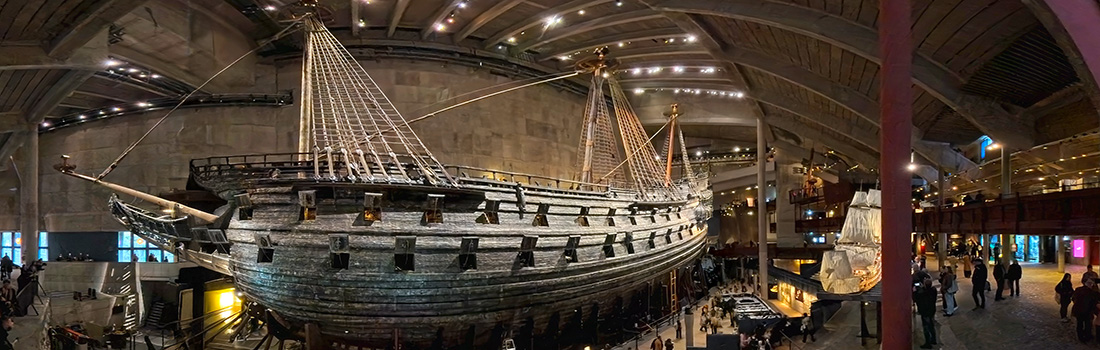
- Unique museums: Among the most visited are the Vasa Museum (which displays the world's only intact 17th-century warship, which sank on its maiden voyage)
- and the interactive ABBA The Museum, dedicated to the globally famous Swedish pop group.
Also well worth a visit are the interactive Viking Museum, which transports visitors into the era of Norse warriors and mythology,

and the contemporary photography gallery Fotografiska.
-
Subterranean Art Gallery: Stockholm's subway system (Tunnelbana) is widely celebrated as the world's longest art gallery, with over 90 of its 100 stations uniquely adorned with paintings, sculptures, and mosaics by various artists.
Tourism and Landmarks
Stockholm's tourist appeal lies in the perfect synergy of historical depth and stunning, pristine natural surroundings.
-
The City Hall (Stadshuset): An iconic red-brick building crowned by three golden crowns atop its tower, where the prestigious Nobel Prize banquet is held every year on December 10th.
-
Gamla Stan (Old Town): A picturesque medieval core featuring narrow cobblestone alleys, vibrant historic buildings, and the grand Royal Palace (Kungliga Slottet), which serves as the official residence of the Swedish monarch.
-
The Royal Urban Park Djurgården: A lush green island right in the center of the city, offering a peaceful sanctuary, historic walking paths, the Gröna Lund amusement park, and several world-class restaurants.