



The Lovrenc Lakes, also known as the Lovrenško barje peat bog, represent a unique natural phenomenon located on Pohorje, one of the most distinctive and preserved mountainous regions in Slovenia. As one of the best-preserved raised bogs in the country, the Lovrenc Lakes constitute an essential component of Slovenian natural heritage, offering immense ecological, geomorphological, and botanical value.
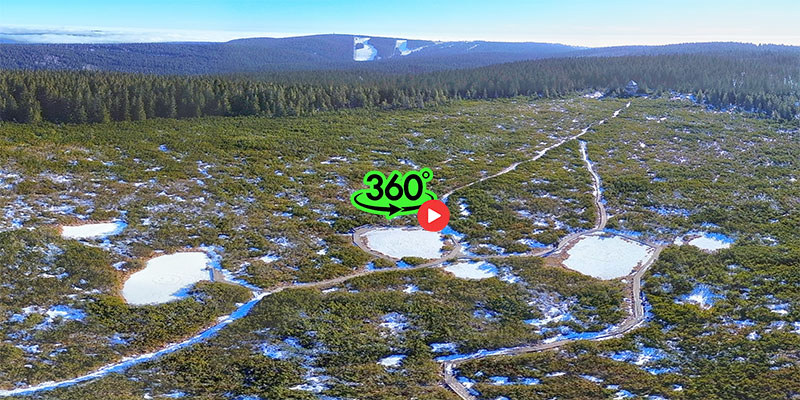
The peat bog is situated at an elevation between 1,520 and 1,535 meters above sea level, nestled between the summits of Mulejev vrh (1,537 m) and Ribniški vrh (1,537 m). The bog encompasses an area of approximately 22 hectares and consists of 20 to 22 shallow, picturesque lakes (bog windows). These lakes are interconnected by spongy cushions of peat moss, characteristic of raised ombrotrophic bogs. The water surface area fluctuates depending on seasonal precipitation.
The ecosystem holds extraordinary ecological importance, providing a rare sanctuary for many endangered and specialized plant and animal species. The lake water is distinctly acidic and oligotrophic (nutrient-poor), creating extreme environmental conditions. Among the hallmark botanical species are various peat mosses (Sphagnum), the carnivorous round-leaved sundew (Drosera rotundifolia), and ericaceous shrubs such as heather (Calluna vulgaris). The fauna includes specialized species of alpine and bog-dwelling birds, reptiles, and cold-adapted insects.
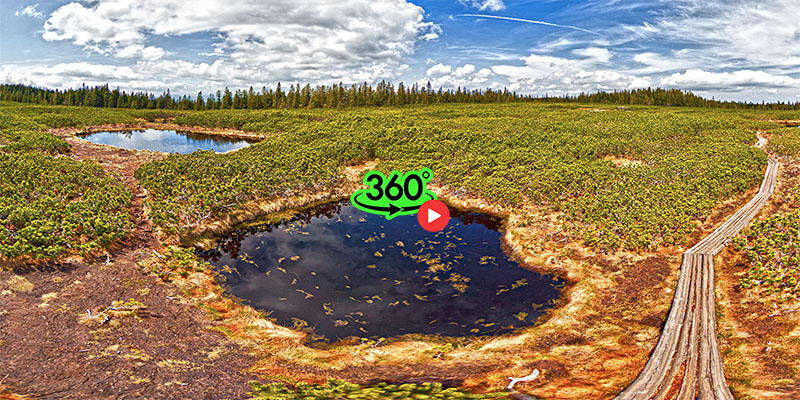
The Lovrenc Lakes are a classic textbook example of a raised bog (ombrotrophic peatland), meaning its water balance depends entirely on rainfall and snowmelt rather than groundwater or surface inflow. Raised bogs are globally rare habitats with immense carbon storage capacity and biodiversity value. While Lovrenško barje is Slovenia's largest and most famous raised bog, related peat formations also occur in other parts of the country.
In Slovenia, raised bogs are also found on the Pokljuka Plateau within the Triglav National Park, and around Črni Vrh above Idrija. Globally, pristine raised bogs are prominent across Scandinavia and North America—such as Store Mosse in Sweden, Patvinsuo in Finland, and the vast Hudson's Bay Lowlands in Canada. Relicts of former raised bogs can still be observed in the Ljubljana Marsh (Ljubljansko barje), primarily as woodland islands of birch and Scots pine. Prior to extensive 19th-century drainage, these were among the southernmost and lowest-lying raised bogs in Central Europe.
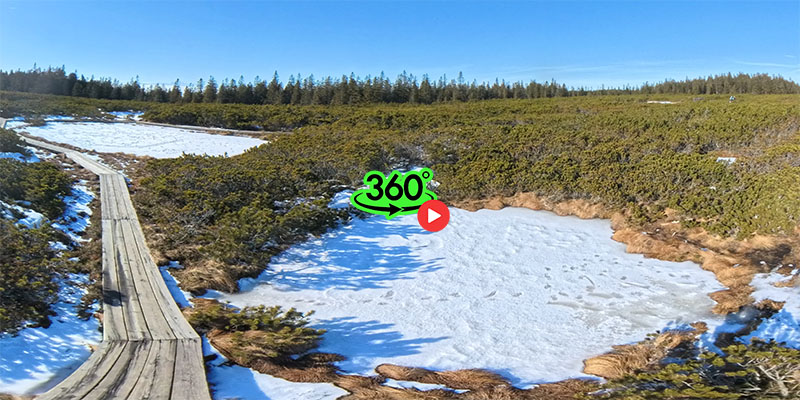
The formation of the bog traces back to the end of the last Ice Age, approximately 8,000 years ago, when meltwater collected in shallow bedrock depressions on an impermeable geological sub-base. The gradual accumulation and slow decomposition of organic material, predominantly peat mosses, caused the ground level to steadily rise above the water table. This peat accumulation process is extraordinarily slow, taking millennia to build a layer several meters thick.
Today, the Lovrenc Lakes are a popular destination for hikers, nature photographers, and environmental researchers. The sensitive wetland is equipped with raised wooden footbridges and a wooden observation tower, ensuring safe, sustainable, and impact-free access. Visitors can experience undisturbed tranquility, observe rare glacial-relict vegetation, and admire the serene beauty of Pohorje's protected nature.
Sources and Literature:
- Maruša Rupel, "Naravni fenomeni Slovenije," Založba Narava, 2019.
- Janez Novak, "Pohorje: Naravna dediščina in turistični vodnik," Turistično društvo Slovenija, 2021.
- Official Portal of Slovenia - Lovrenška jezera
- Enciklopedija Slovenije, Vol. 8, Mladinska knjiga, 1998.
Kutnar, L. (2000). "Spruce Mire Types on the Pokljuka Plateau, Slovenia." Phyton (Horn, Austria) 40 (4): 123-128. Study examining bog spruce forest types on the Pokljuka Plateau and their vegetational attributes.
Krivograd Klemenčič, A., Vrhovšek, D., Smolar-Žvanut, N. (2006). "Contribution on the Algal Flora of Slovenia, with Emphasis on Newly Recorded Algal Taxa." Acta Musei Nationalis Pragae, Series B, Historia Naturalis, 62 (1–2): 71–80. Research on phytoplankton and algae in Slovenia, including newly identified taxa in wetland habitats.
Kocjan, J. M., Vreš, B., Seliškar, A., Anderle, B., Dakskobljer, I. (2014). "Contribution to the knowledge of the distribution of vascular plants in spring areas and bogs in Slovenia – III." Folia Biologica et Geologica 55/2: 75–124.