

Lendava lies in the far eastern part of Slovenia, directly on the Hungarian border, in the valley of the Ledava River, which flows southward into the Mura. The town stands at the transition between the flat Prekmurje plain and the gently rising Lendavske gorice, whose slopes form the town’s characteristic landscape. Its border position makes Lendava naturally open toward the Hungarian cultural and economic space; the nearest larger Hungarian town is Nagykanizsa, while Murska Sobota lies about 30 km to the west.
Geography and environment
Lendava belongs to the wider Pannonian region, defined by:
-
temperate continental climate with warm summers and cold winters,
-
fertile soils suitable for agriculture, vineyards and orchards,
-
the Lendava Hills, which rise above the town and create a distinctive cultural landscape,
-
the Ledava River, historically important for settlement, milling, fishing and transport.
The Lendava Hills are dotted with vineyards, small hamlets and traditional wine cellars. Their highest point, Gorica (328 m), offers wide views over Prekmurje and the Hungarian plain.
History
Lendava’s history is long, layered and closely tied to the meeting of Slavic and Hungarian worlds.
Early medieval settlement and the arrival of the Hungarians
The area was inhabited by early Slavic communities. In the 9th century, Hungarian tribes entered the Pannonian Basin and gradually established control over the region. The Lendava area became part of the early Hungarian defensive system protecting routes between Pannonia and Styria. This early coexistence of Slavic and Hungarian populations laid the foundations for centuries of bilingual identity.
Middle Ages
The first mentions of Lendava (Lindau, Lyndwa) in the 12th–13th centuries refer to a fortified post on a strategic hill. The Lendava Castle became a key defensive stronghold against Ottoman incursions and an important feudal centre. A mixed Slovene, Hungarian and German population shaped the town’s medieval character.
Early modern period
In the 16th and 17th centuries, Lendava remained part of the Hungarian realm, strengthening its bilingual cultural identity. Crafts, milling and early industrial activities developed, followed in the 19th century by stronger economic growth and a lively cultural scene.
20th century
After the Treaty of Trianon (1920), Lendava became part of the Kingdom of Serbs, Croats and Slovenes. After the Second World War, it grew into an important industrial and cultural centre of Prekmurje, known for the Nafta Lendava company and its multicultural environment. In 1994, Lendava was officially declared a town and became the seat of the Municipality of Lendava.
Bilingual identity
Lendava is one of Slovenia’s most distinctly bilingual environments. Slovene and Hungarian (Lendva) are both official languages, reflected in:
-
bilingual signage,
-
schools and kindergartens,
-
cultural institutions,
-
everyday communication and local identity.
This bilingualism is not merely administrative—it is a living cultural practice that shapes the town’s character.
Culture and cultural landmarks
Lendava is a vibrant cultural centre with several important institutions and landmarks:
-
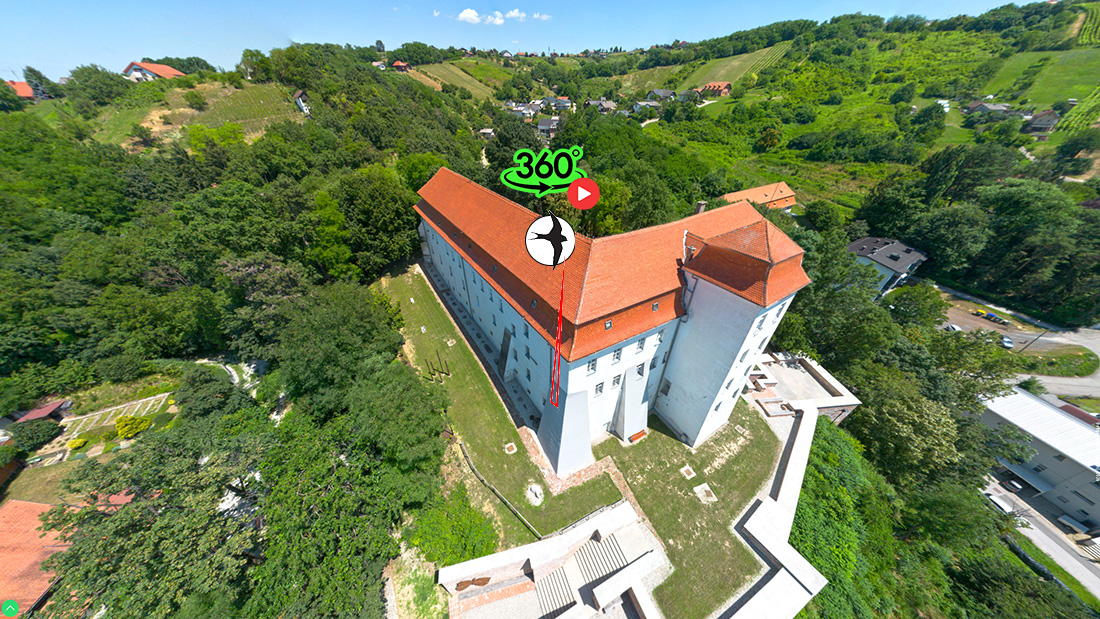
Lendava Castle – the town’s main historical building, today home to the Lendava Gallery and Museum, hosting art exhibitions, historical collections and international graphic art shows.
-
Lendava Synagogue – one of the best-preserved synagogues in Slovenia, now a cultural venue for exhibitions and concerts.
-
Lendava Cultural Centre – a venue for theatre, concerts and festivals.
-
Vinarium Tower – Slovenia’s tallest observation tower (53.5 m), offering panoramic views of four countries: Slovenia, Hungary, Croatia and Austria.
-
Monuments and heritage sites reflecting both Hungarian and Slovene cultural traditions.
The town is known for festivals, international art exhibitions, culinary events (bograč, Prekmurje layer cake) and a lively cultural scene that blends Slovene and Hungarian influences.
Lendavske gorice (The Lendava Hills)
Lendavske gorice form one of Slovenia’s most picturesque wine‑growing landscapes. Their features include:
-
scattered vineyard cottages and cellars,
-
centuries‑old wine‑making traditions,
-
panoramic views over the Pannonian plain,
-
a cultural landscape shaped by generations of viticulture.
The hills are a popular destination for hiking, wine tourism and exploring traditional rural architecture.