

You know the 'phone' pun - when the first person in line says 'a'... and the last one says 'mom'. The same thing happens with geographical names. The story, the likes of which are many in Slovenia, begins like this... the farmer Polšak had daughters who grazed cattle on his mountain (the Dleskov Plateau). The peaks above the mountain were named after his virtuous daughters "Polšakove device" - then the name changed to Poljš'ke device, the cartographers of the time, who did not know the letter "š", wrote Polish Virgins - and then the names on the maps are with the Poles... and we wonder... just what the Polish women - and virgins at that - were doing up here on the Dleskovska Plateau (lol...)
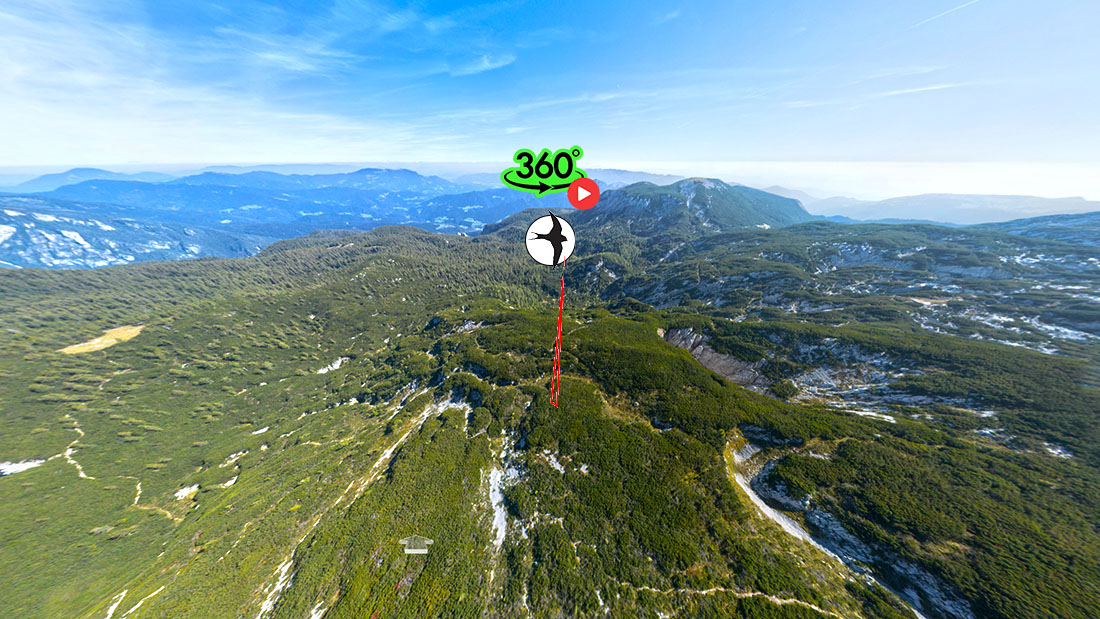 .
.
Correct Naming: Polšakove device vs. Incorrect Poljske device
Origin of the Correct Name
The name Polšakove device derives from the local toponym Polšak, which refers to the pasture and surrounding slopes. It is an old field name linked to pastoral use and land ownership. From this root also comes the name Planina Polšak.
The term device in this context refers to rock towers, rock pinnacles, or prominent rocky formations, a naming pattern common in the Slovenian Alps (e.g., Škrlatinske device).
How the Incorrect Form “Poljske device” Appeared
The incorrect name Poljske device emerged due to:
• transcription errors in older maps,
• phonetic confusion between Polšak and Poljak/Poljski,
• mistakes in some 20th‑century guidebooks,
• automated translations and generalisation in tourist materials.
Because Polšak is a less familiar name, the incorrect form spread easily, but it has no etymological, historical, or geographical justification.
Why Correct Naming Matters
Using the correct name Polšakove device:
• preserves local identity,
• respects historical and linguistic heritage,
• prevents misinterpretation (e.g., association with Poland),
• ensures consistency in cartography and scholarly literature.
Mislabeling of the Highest Peak of the Polšakove Device (2028 m) as Molička peč
The highest peak of the Polšakove Device (2028 m) is incorrectly marked as Molička peč on numerous geographic maps. This error is the result of historical cartographic inaccuracies, misinterpretation of the terrain, and insufficient understanding of local toponyms. Several factors contributed to the spread and persistence of this mistake.
Historical Cartographic Errors
Early maps of the Kamnik–Savinja Alps were produced at a time when local place names were not systematically collected. Cartographers often relied on:
• oral accounts from locals,
• incomplete sketches,
• indirect descriptions from early mountaineering guides.
Because Molička peč (1829 m) was well known—especially due to the chapel of Saints Cyril and Methodius—its name was frequently extended to the entire ridge, including peaks that are not geographically connected to Molička peč.
Visual Misinterpretation in the Field
From the plateau, the highest peak of the Polšakove Device (2028 m) appears as a prominent rocky head:
• higher,
• more exposed,
• visually dominant.
Since Molička peč is lower and partially hidden behind the ridge, many hikers—and later mapmakers—incorrectly assumed that the most prominent peak must be Molička peč.
Ambiguity of the Term Device
The term device in the Slovenian Alps refers to rock towers or pinnacles. The ridge of the Polšakove Device contains several such formations, making it difficult in the past to determine:
• which tower was the “main” one,
• which peak the name referred to,
• where the ridge of the Device ends and the area of Molička peč begins.
This terminological ambiguity contributed to the mislabeling.
Spread of the Incorrect Name Poljske device
Additional confusion arose from the incorrect form Poljske device, which appeared due to:
• phonetic confusion between Polšak and Poljski,
• transcription errors in older guidebooks,
• inaccurate translations and generalisations.
Once this incorrect form appeared on maps, the error began to reproduce itself automatically.
Cartographic and Publishing Inertia
Once a name appears—correctly or incorrectly—in:
• mountaineering guides,
• maps,
• tourist brochures,
• online sources,
later authors often repeat it uncritically. Over time, the mistake becomes a “standard,” even though it has no historical or geographical basis.
Why Correct Naming Matters
Preservation of Local Toponymy
The name Polšakove Device derives from the local toponym Polšak, which refers to:
• Planina Polšak,
• the surrounding slopes,
• historical land use.
It is part of the region’s intangible cultural heritage.
Accuracy in Cartography
Geographic maps must reflect:
• correct elevations,
• correct peak identities,
• correct place names.
Mislabeling the highest peak leads to:
• orientation errors,
• incorrect descriptions in guidebooks,
• inaccurate GPS data.
Distinguishing Two Completely Different Peaks
• Molička peč (1829 m) is a lower rocky prominence above Robanov kot, known for its chapel.
• The highest peak of the Polšakove Device (2028 m) is part of the northern ridge and has no direct connection to Molička peč.
These are two distinct geographical features, and conflating them obscures the true structure of the ridge.
Geomorphological and Historical Accuracy
The Polšakove Device form:
• a tectonically segmented ridge,
• part of the northern escarpment of the Dleskovška plateau,
• a geomorphologically separate unit from Molička peč.
Correct naming supports a clearer understanding of the plateau’s geological and geomorphological development.
Conclusion
The mislabeling of the highest peak of the Polšakove Device (2028 m) as Molička peč on many maps stems from historical cartographic errors, misinterpretation of the terrain, misunderstanding of local toponyms, and later uncritical repetition. Using the correct name Polšakove Device is essential for:
• preserving local identity,
• ensuring cartographic accuracy,
• proper orientation in the field,
• understanding the geomorphological structure of the northern edge of the Dleskovška plateau.
If you want to explore the historical evolution of these names further, I can expand the discussion with a comparison of map sources from different periods.